Water is often the forgotten utility. While organizations obsess over energy consumption and carbon footprint, water waste quietly inflates operating costs and environmental impact. In large commercial facilities, manufacturing plants, and hospitality operations, undetected leaks and inefficient usage patterns can account for 20–30% of water bills going directly to waste.
AVANI's Smart Water Meter is purpose-built to fix this.
Beyond the Basic Meter
Traditional water meters do one thing: count liters. They tell you how much you used last month, and nothing else. By the time a leak appears on a bill, it may have been running for weeks.
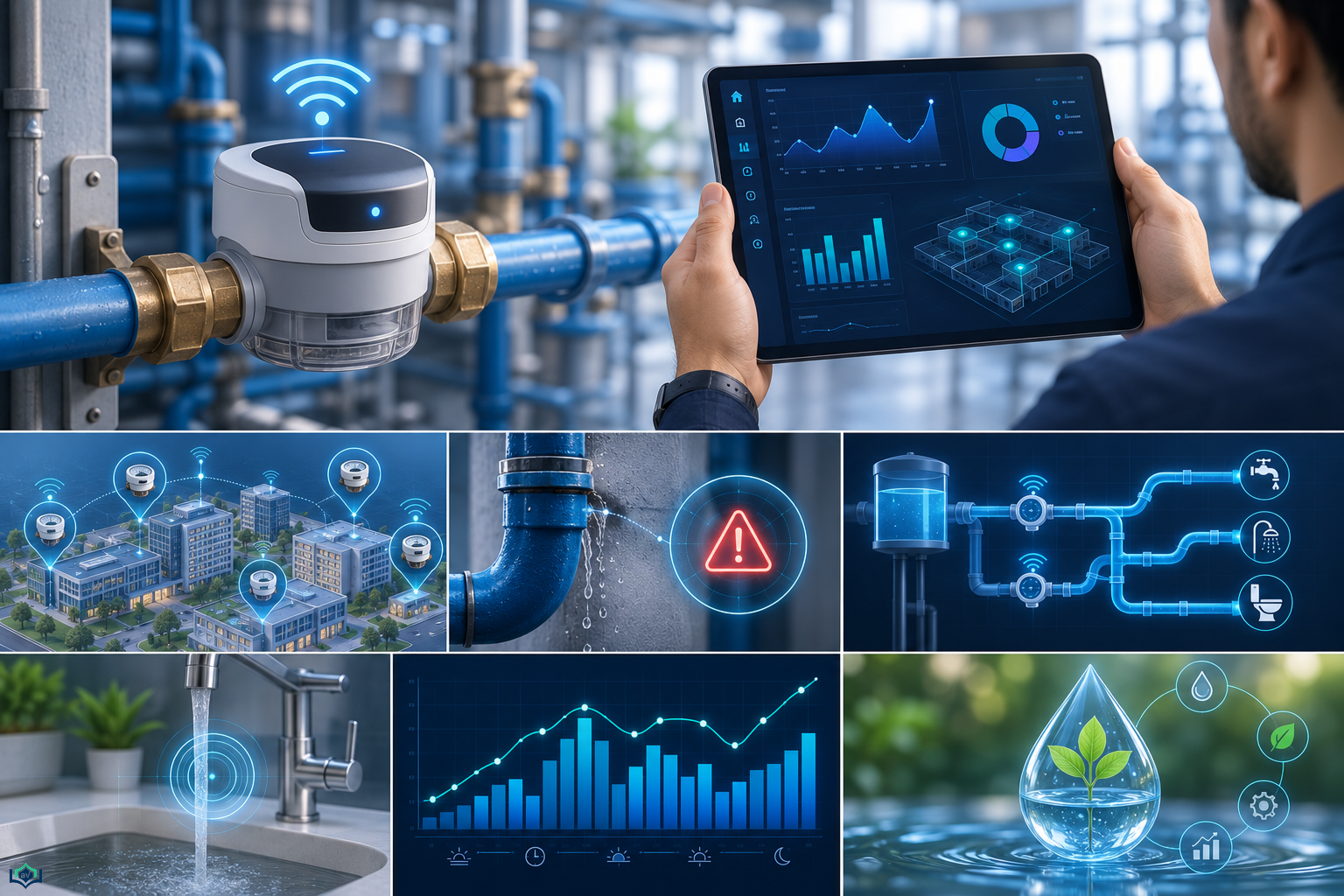
AVANI's Smart Water Meter is fundamentally different. It's an IoT-enabled intelligence system that monitors water flow continuously and feeds real-time data into an analytics dashboard.
Key Capabilities That Drive Results
Real-Time Consumption Monitoring
Every tap, pipe, and outlet is tracked in real time. Facility managers can see exactly where water is being consumed, at what rates, and during what hours — breaking the opacity that makes water management so difficult.
Intelligent Leak Detection
AVANI's algorithms identify anomalous flow patterns — water moving when it shouldn't be, consumption spikes with no corresponding operational activity — and flag them immediately. A leak that would have cost thousands in water waste and structural damage gets caught in hours, not weeks.
Historical Trend Analysis
The platform maintains granular historical data, enabling teams to identify patterns: Which days see peak consumption? Which zones are consistently over-consuming? How does seasonal demand shift? This intelligence informs both operational decisions and capital planning.
Conservation Recommendations
AVANI doesn't just report — it advises. Based on consumption patterns and benchmarks, the platform surfaces specific recommendations for reducing water usage without impacting operations.
The Business and Environmental Case
The ROI argument is straightforward. For a mid-size manufacturing facility consuming 50,000 liters per day:
A 15% reduction in waste saves roughly 7,500 liters daily
Leak detection prevents costly structural water damage
Conservation metrics contribute directly to ESG reporting and sustainability targets
Beyond economics, responsible water management is increasingly a stakeholder expectation. Investors, customers, and regulators are all watching sustainability metrics more closely than ever.
Who Benefits Most?
Manufacturing plants with high-volume water processes
Hotels and hospitality facilities managing multiple water systems
Corporate campuses with large footprints and distributed water infrastructure
Municipal and public sector facilities under sustainability mandates
Water is the next frontier of operational efficiency. AVANI makes managing it as sophisticated as managing energy.